Zero Budget, Maximum Impact: Marketing for Authors.
Writing tips and advice from The Writing Community Chat Show.

Marketing a book often feels like trying to shout in a crowded stadium while everyone else has a megaphone. When you don’t have a massive advertising budget, or any budget at all, the task can feel impossible.
However, after 380+ interviews with New York Times best-sellers, indie icons, and industry experts, one thing has become clear: the most effective marketing isn’t bought; it’s built.
Here are the top strategies to get your book noticed without spending a single penny.
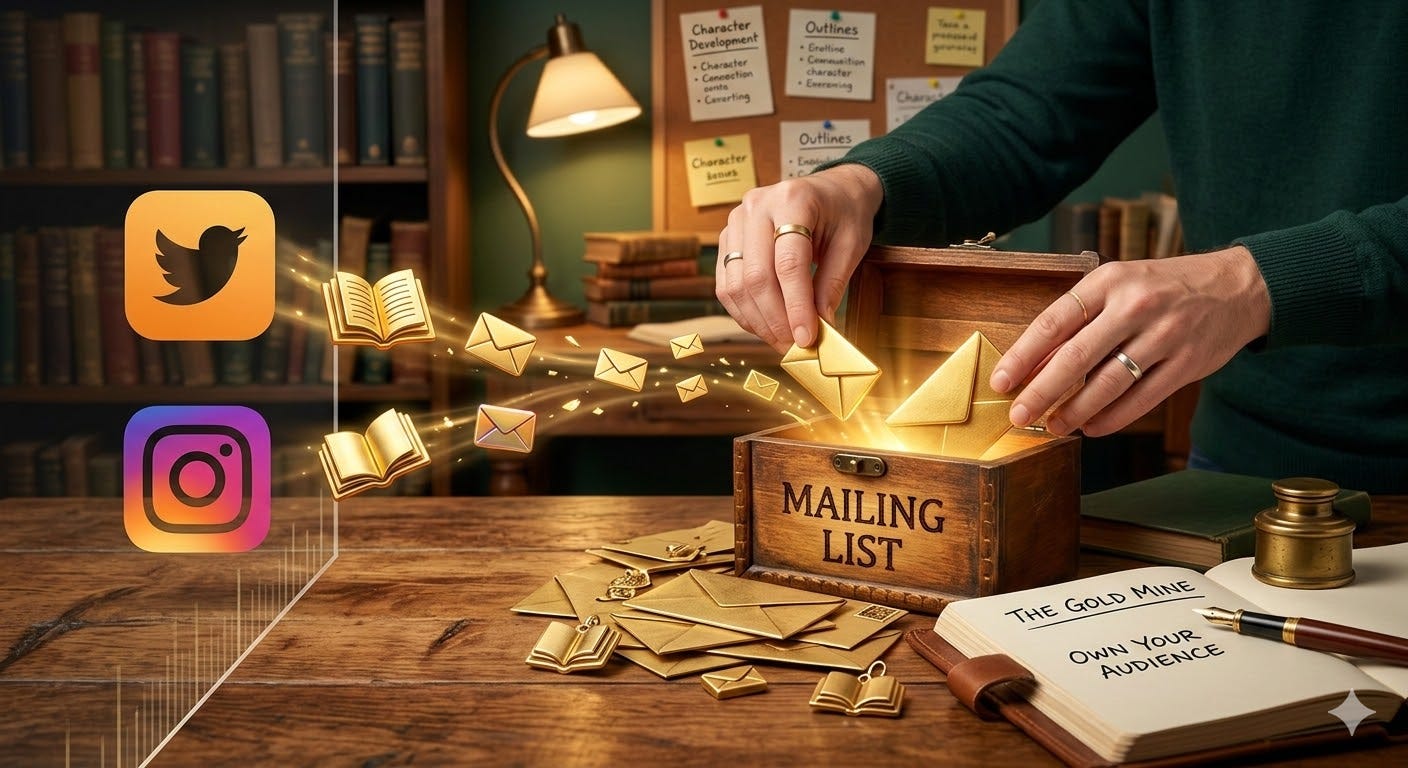
Someone in a Facebook group laughed at my use of an Ai image for these posts. Creating novels with Ai is something everyone should avoid. Using it to create great images for a blog post, absolutely!
1. Master the “Slow Burn” of Social Media.
The biggest mistake authors make is using social media solely as a digital billboard. If every post is “Buy My Book,” people will eventually tune out.
Document, Don’t Create: Instead of worrying about the perfect content, share your process. A photo of your messy desk, a struggle with a specific chapter, or a poll about a character’s name builds a connection.
The 80/20 Rule: 80% of your posts should be helpful, entertaining, or personal. Only 20% should be a direct ask for a sale.
Engage with Peers: Don’t just look for readers; look for fellow authors. Commenting on others’ posts genuinely builds a network that will naturally support your launch. This is why The Writing Community Chat Show started. Growing a network of author friends on Twitter (X).
2. The Gold Mine: Your Mailing List.
If you do only one thing for your marketing, let it be this. While social media platforms like X or Instagram are great for discovery, you are essentially renting your audience from them; if an algorithm changes or an account is suspended, you lose that connection instantly. An email list is an asset you own outright, providing a direct, unfiltered line to your most dedicated readers. We lost thousands of followers when Twitter changed to X. Substack works perfectly, building your email list when people subscribe. Something you can export and use even if Substack seized to exist.
To make this work without a budget, focus on these three steps:
Choose a Free Provider: Use the entry-level tiers of platforms like MailerLite or Mailchimp, which allow you to build a professional list and send automated emails at no cost until you reach a certain subscriber count.
Create a Reader Magnet: Offer a “bribe” to entice sign-ups. This could be an exclusive short story, a deleted scene, or a character cheat sheet that readers can only get by joining your list.
Cross-Promote: Use services like StoryOrigin or BookFunnel to participate in group giveaways with other authors in your genre. This allows you to find new readers who are already looking for books exactly like yours.
3. Leverage “Street Teams” and ARCs!"
You don’t need an expensive PR firm when you have passionate readers. A Street Team is a small group of superfans who help spread the word.
ARC (Advanced Review Copies): Send digital copies of your book to your most engaged followers a month before release.
The Goal: Ensure that on launch day, you already have 10–20 honest reviews waiting on Amazon and Goodreads. Social proof is the most powerful free marketing tool in existence.
4. Become a Guest Expert.
Visibility is currency. You have a unique story to tell, not just in your book, but about your journey as a writer.
Podcast Guesting: Look for podcasts that align with your genre or the writing craft. Most hosts are constantly looking for interesting guests.
Guest Blogging: Write an article for a writing community site or a genre-specific blog. It positions you as an authority and usually includes a link back to your book. USE SUBSTACK! WE LOVE IT!
5. Optimise What You Already Have.
Metadata is your silent salesman. If your Amazon categories and keywords are wrong, the right readers won’t find you, no matter how much you shout.
Keywords: Use phrases readers actually type into search bars (e.g., “Cosy Mystery with a Cat” rather than just “Fiction”).
The Blurb: Treat your book description like a movie trailer. Focus on the stakes and the hook rather than a dry summary of the plot.
The Bottom Line.
Marketing is simply the act of telling the right people that your book exists. It requires time and consistency rather than a large bank account. Focus on building real relationships with your readers, and the sales will follow.
Final Tip: Don’t try to do everything at once. Pick two of these strategies, master them, and grow from there.
The Writing Community Chat Show is now a NON-PROFIT organisation! A community interest company trying to create great things and support authors. To do this, we need support too. Consider becoming a paid subscriber to help us grow the non profit business.
You can also donate to us via PayPal here.