Submitting Your Manuscript? Tips To Catch An Agents Eye.
Writing tips and advice from The Writing Community Chat Show.

After 380+ interviews on The Writing Community Chat Show, we’ve heard almost every piece of advice under the sun. But when it comes to the nitty-gritty of the submission package, writers still get tripped up on the basics.
One of the most common questions I get is: “Should I include a coversheet with my title and word count, or should I just dive straight into the story?”
If you’re staring at a blank Word document wondering how to package your masterpiece for a British literary agent, here is the no-nonsense guide to getting it right.
To Coversheet or Not to Coversheet?
The short answer: Yes, include a title page (coversheet).
While your query letter (the email or form you send) contains your pitch and bio, your manuscript is a separate file. If an agent prints it out or sends it to their Kindle, they need to know what they are looking at without digging through their inbox.
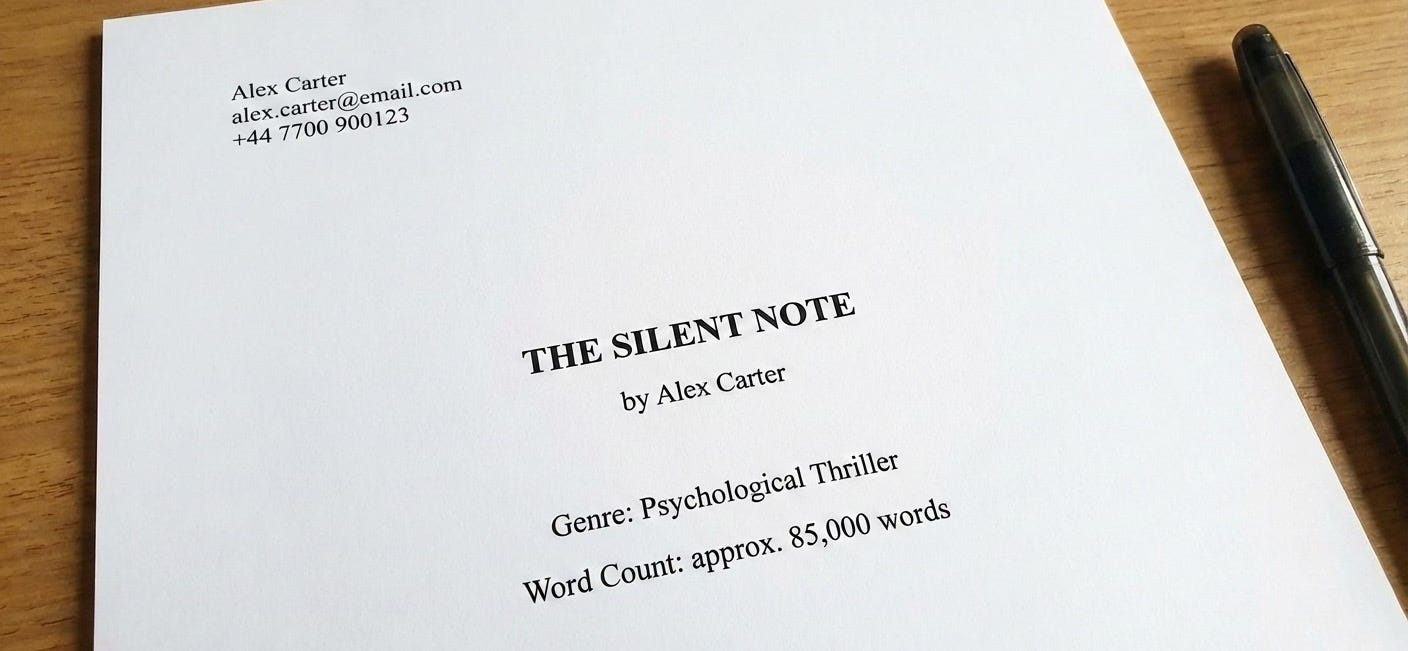
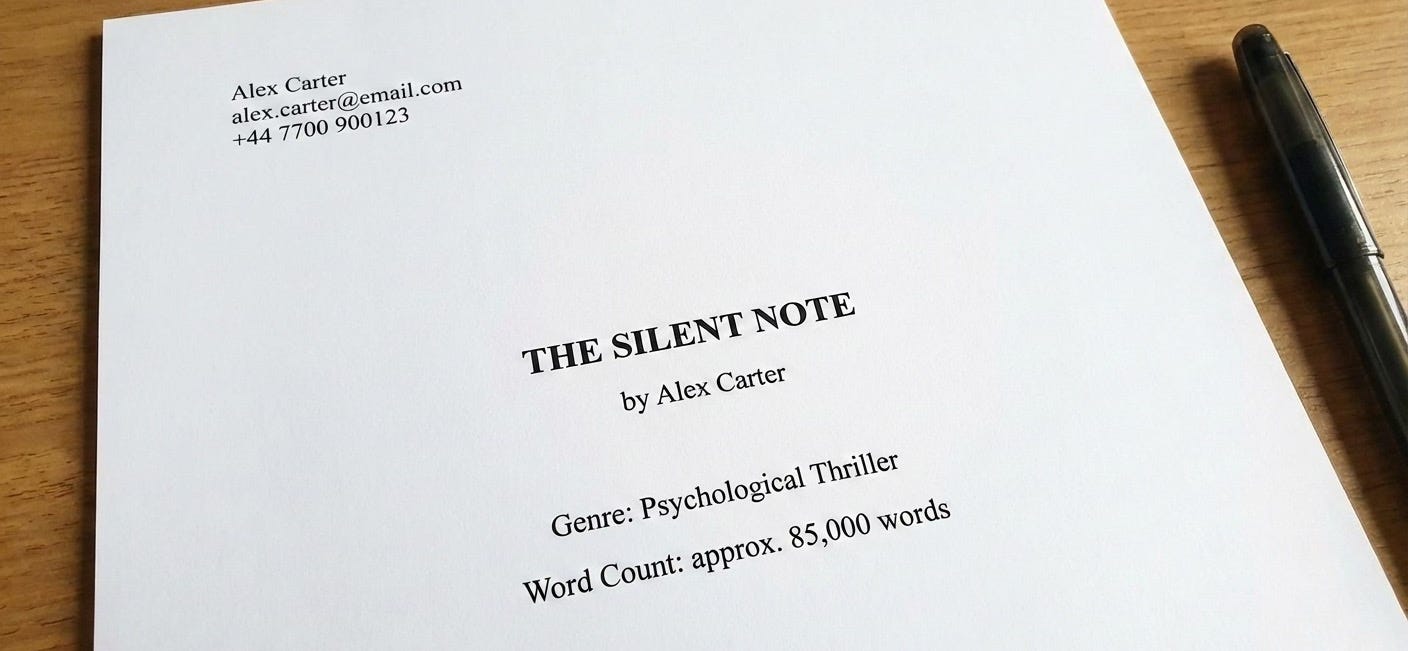
What to include on your coversheet:
The Title: Centred, halfway down the page, in bold.
Your Name: Use your real name (and your pen name if applicable).
The Genre: (e.g., Psychological Thriller, Literary Fiction).
Word Count: Rounded to the nearest thousand (e.g., Approx. 85,000 words).
Contact Details: Your email address and phone number in the corner.
Does the coversheet count towards page limits?
This is where writers get nervous. If an agent asks for the “first 50 pages,” does the coversheet take up one of those slots?
Technically, no. Agents want 50 pages of prose. They won’t penalise you for including a professional title page. However, to be safe and professional, you should always start your page numbering on the first page of the actual story, not the coversheet.
Pro Tip: In Microsoft Word, you can set the first page as a “Different First Page” so your “Page 1” starts where Chapter One begins.
Practical Tips for a Clean Submission.
Agents are looking for reasons to say no so they can clear their mountain of emails. Don’t give them a reason based on formatting.
Standard Formatting is King: Use Times New Roman, 12pt, and double-line spacing. It’s the industry standard for a reason—it’s easy to read and easy to mark up with notes.
The Header is Your Friend: Include your Surname / Title / Page Number in the top right header of every page (except the coversheet). If the pages get separated, the agent knows exactly whose work they are holding.
Check the “House Rules”: Every agency has a submissions page. If they explicitly say “Do not include a title page,” then follow that. Their house, their rules.
The “Hook” Start: Even if you have a beautiful coversheet, your story needs to start with a bang on page one. Don’t rely on the package to do the work for the prose.
The Verdict.
Think of your coversheet as the front door to your house. It should be clean, clear, and tell the visitor exactly where they are. Once they step inside (Page 1), that’s when you let the décor, your writing, do the talking.
Keep it simple, keep it professional, and most importantly, keep writing.
What’s your biggest “submission phobia”? Let us know in the comments, and we might tackle it in the next post!
If you would like lots more, in depth articles that will help your writing career grow, then become a paid subscriber today. You will unlock many articles, downloadable digital products and more.
You will also get access to our QUERY CLINIC: